
Multiculturalism is destroying the West
The Balkanization of Europe

The Austro-Hungarian army should not have been defeated by the Russians in World War I. The Austrian army was better equipped and had a strong officer corps, while the Russian military was poorly led, poorly equipped, and badly trained. Yet the Russians consistently routed the Austrians in nearly every battle. The explanation for this rests in the empire's multicultural nature. The Austro-Hungarian Empire was made up of many ethnic groups—Germans, Hungarians, Czechs, Slovaks, Poles, Croats, and Serbs, among others. Each group had its own language and customs, and they rarely mixed. As a result, soldiers in the same unit couldn’t communicate effectively with each other, and often resented each other in general. Despite having the finest weapons and doctrine, they could never use them effectively, leading to constant defeats.
The Austrian empire tried to manage this diversity by giving each group a degree of autonomy. The idea was that if every ethnic group was given their own space to practise their culture without interference, there would be peace and stability. But this approach only made the divisions worse. Historian Pieter Judson explains:
“While the empire’s rulers believed that ethnic autonomy would promote harmony, it instead fostered nationalist ambitions and ethnic rivalries. Each group saw itself as distinct from the rest of the empire, and rather than uniting in common cause, they pursued their own political agendas.”
By the early 20th century, nationalist movements had gained so much strength that the empire collapsed.
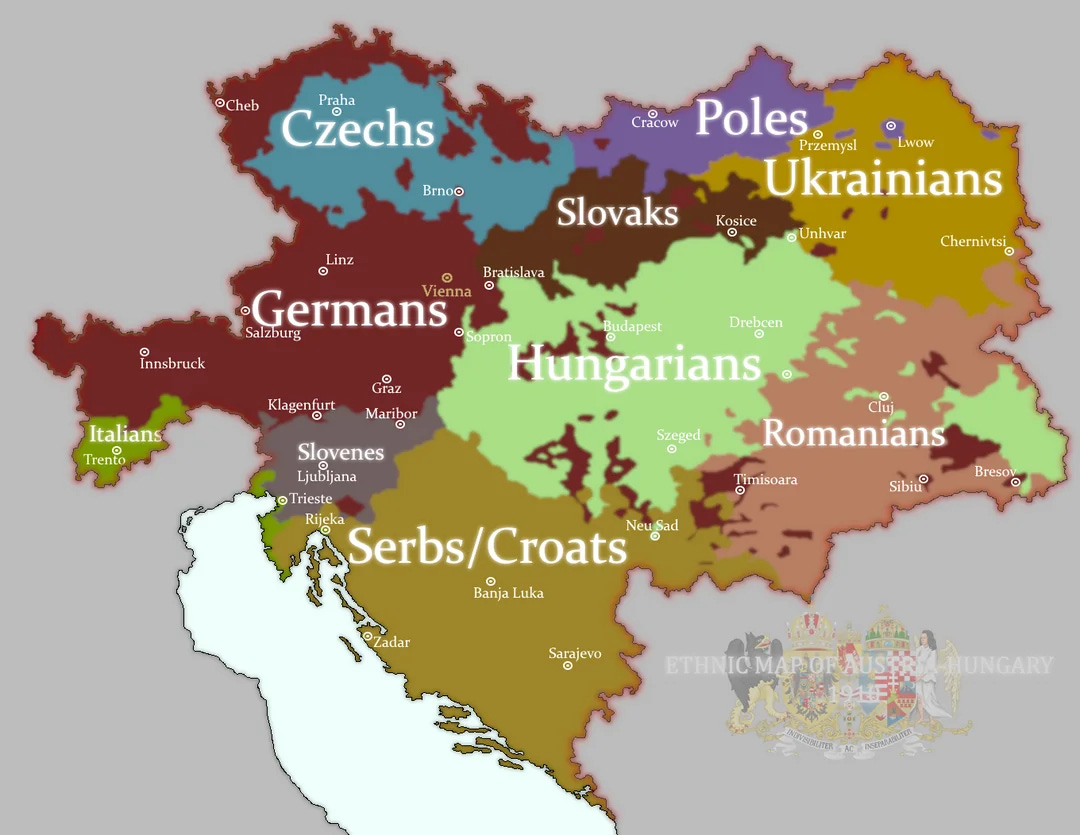
A detailed map of the ethnic divisions in the former Austrian Empire
The tragedy of Yugoslavia, closer to our times, is also worth considering. Created after World War I to unite the South Slavic peoples—Serbs, Croats, Slovenes, and Bosniaks—Yugoslavia was held together by the authoritarian rule of Josip Broz Tito. Tito used state power to suppress ethnic tensions. But after his death, these tensions resurfaced, and the country quickly descended into one of the bloodiest ethnic conflicts in modern history. Historian John R. Lampe writes, “Tito’s Yugoslavia was a fragile construction, reliant on the force of the state to suppress the nationalist sentiments simmering beneath the surface. Once that force disappeared, the country’s ethnic groups quickly turned on each other in a brutal race-war that would tear the state apart.”
Consider the Ottoman Empire, once known as the “sick man of Europe”. The empire ruled over a vast and diverse population, including Turks, Arabs, Armenians, Greeks, and Kurds. It managed this diversity through the millet system, which gave each religious and ethnic group the right to govern itself. But this system only delayed the inevitable. By the 19th century, nationalist movements spread, and the empire's ethnic groups began seeking independence. Historian Bernard Lewis explains the weakness of the Ottoman model:
“The millet system, while initially successful in maintaining order, ultimately encouraged the very separatism it sought to prevent. By granting each group autonomy, the Ottomans fostered a sense of distinct identity among their subjects, which, in the age of nationalism, transformed into demands for independence.”
The Balkan Wars, which saw the empire lose most of its European territory, were driven by the nationalist movements of its ethnic groups. The eventual collapse of the Ottoman Empire after World War I came because it could not create a strong, unified identity.
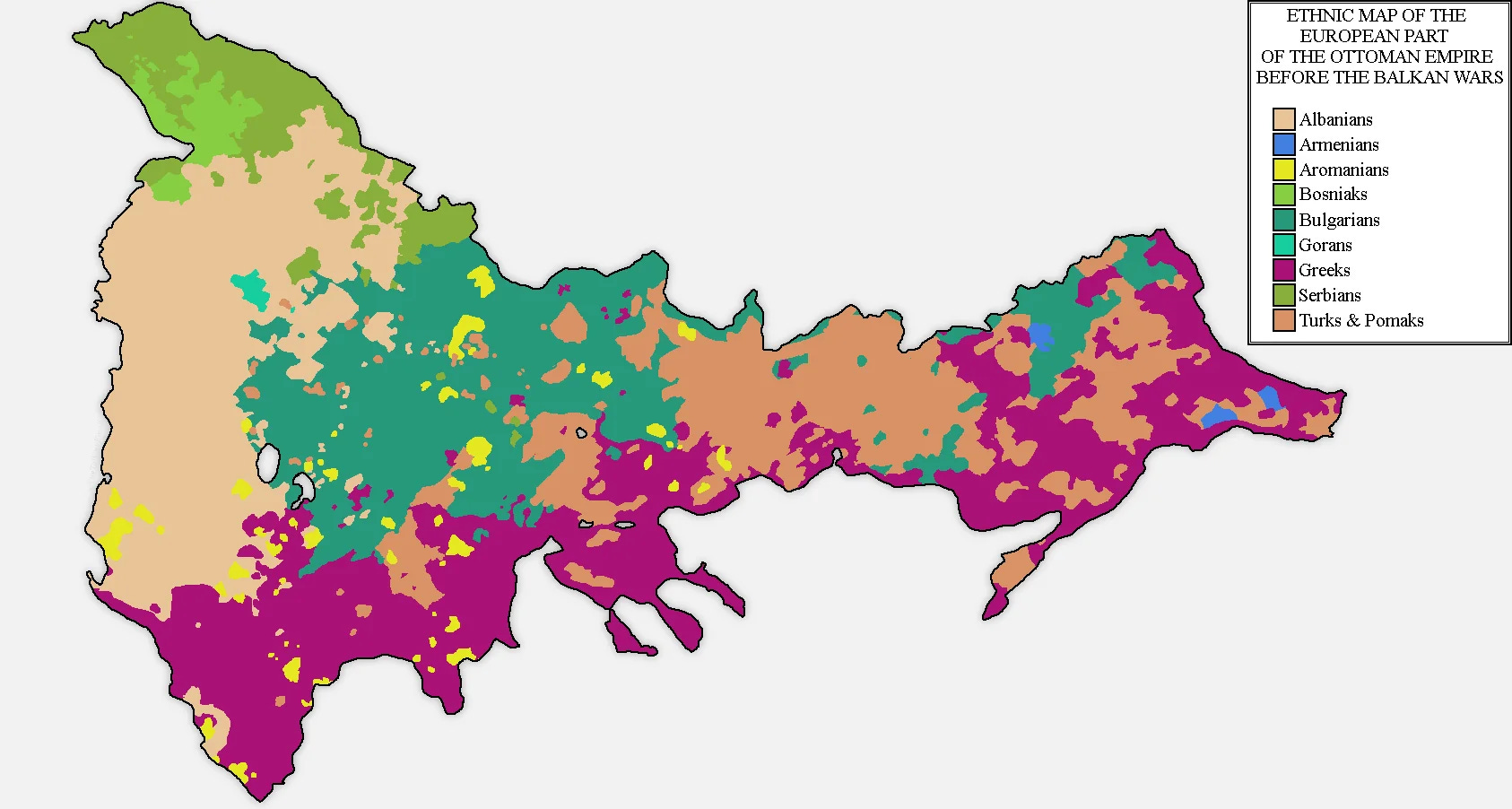
Ethnic map of European part of the Ottoman Empire, 1910, prior to the First Balkan Wars
The Russo-Ukrainian war is a case in point. The conflict started off in 2014 as a civil war between the ethnic Russians in the East and the ethnic Ukrainians of the West. While Russians and Ukrainians had pretty good relations within Ukraine for decades, this was not enough to prevent bloody ethnic conflict between the two groups - especially in the context of a power struggle between East and West.
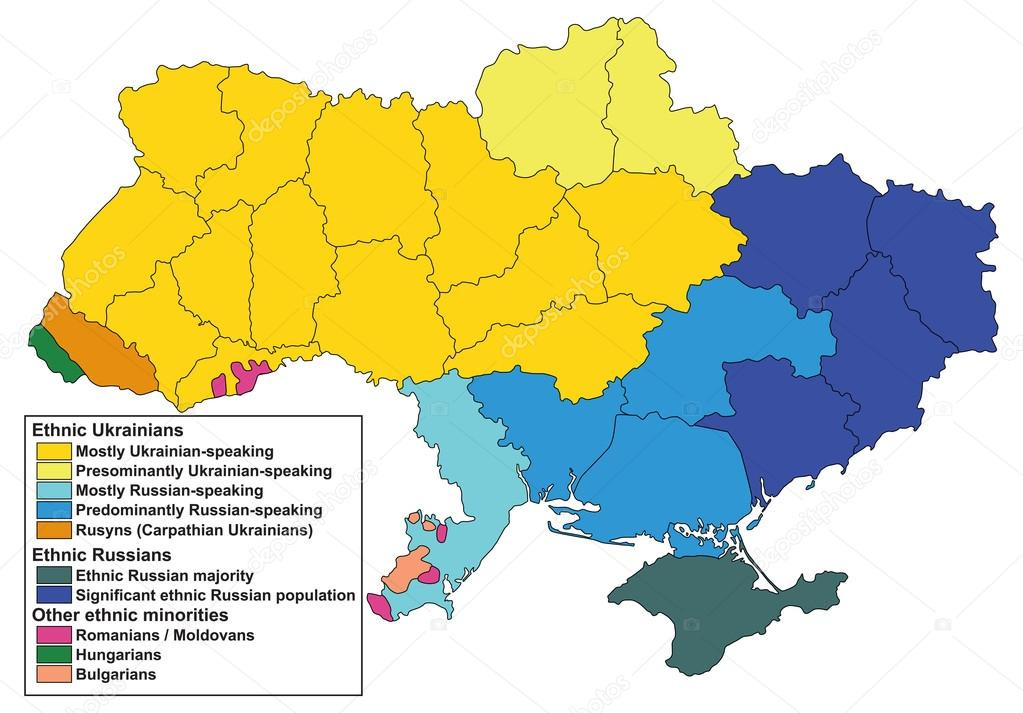
Ethnic map of Ukraine. Civil war was not inevitable because of this division alone; however, the ethnic division meant there was a possibility of conflict.
Lebanon is an interesting case, and quite relevant for Europe because it involved a demographic shift resulting from immigration. Lebanon was home to Maronite Christians, Sunni Muslims and Shia Muslims. The National Pact of 1943 established a political structure that allocated key government roles based on religious identity: the president would always be a Maronite Christian, the prime minister a Sunni Muslim, and the speaker of the parliament a Shia Muslim. The arrival of large numbers of Palestinian refugees after the 1948 war upset this delicate balance, leading to serious tensions and clashes throughout the 1960s. The Palestine Liberation Organization (PLO) set up operations in Lebanon, undermining the government’s control. The 1969 Cairo Agreement, which allowed the PLO to operate freely, deepened the divide between Christian groups, who saw the Palestinian presence as a threat, and many Muslims, who supported their cause. Historian William Harris writes,
Lebanon’s diverse ethnic and sectarian makeup created a state highly susceptible to collapse under the strain of external pressures and internal divisions.
This rising sectarianism culminated in civil war in 1975, after Christian Phalangists attacked Palestinians. This war tore Lebanon apart, and it has never recovered.
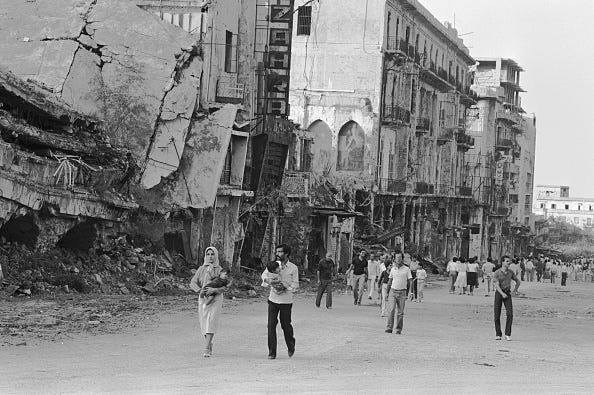
The Lebanese Civil War lasted for 15 years and never solved the sectarian divisions.
Europe must learn a lesson from history: ethnic divisions tear societies apart. This simple fact, appreciated for millennia, has been forgotten by the intellectuals of today.
The demographics of Europe is undoubtedly changing, for better or for worse. The native European population has a record-low birth rate. At the same time, mass immigration from Africa, the Middle East, and Asia, who often have more children, combined with large numbers of refugees from the Middle East, has led to significant demographic change. At the same time, multicultural elites have been urging immigrants to retain their culture and customs, rather than be subjected to an assertive assimilation process - something that is difficult to do anyway with such large amounts of migration. Once described as a conspiracy theory, the western press now recognises the basic fact that Europe is being demographically “replaced”:
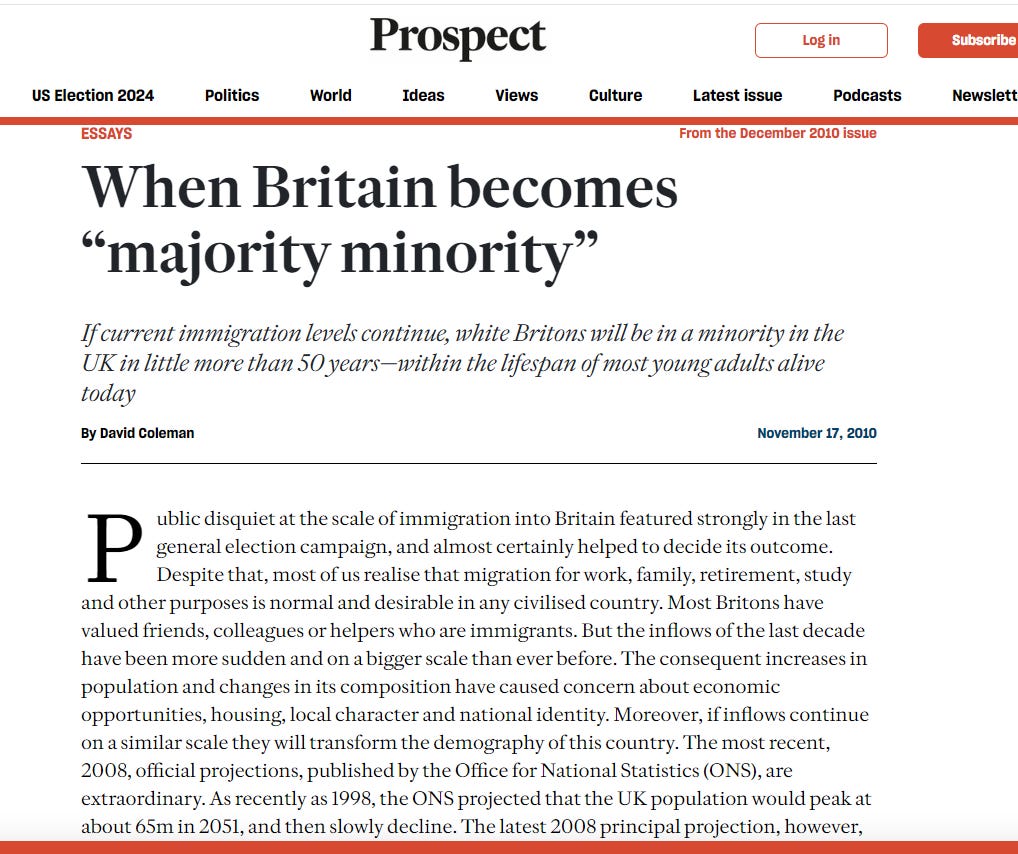
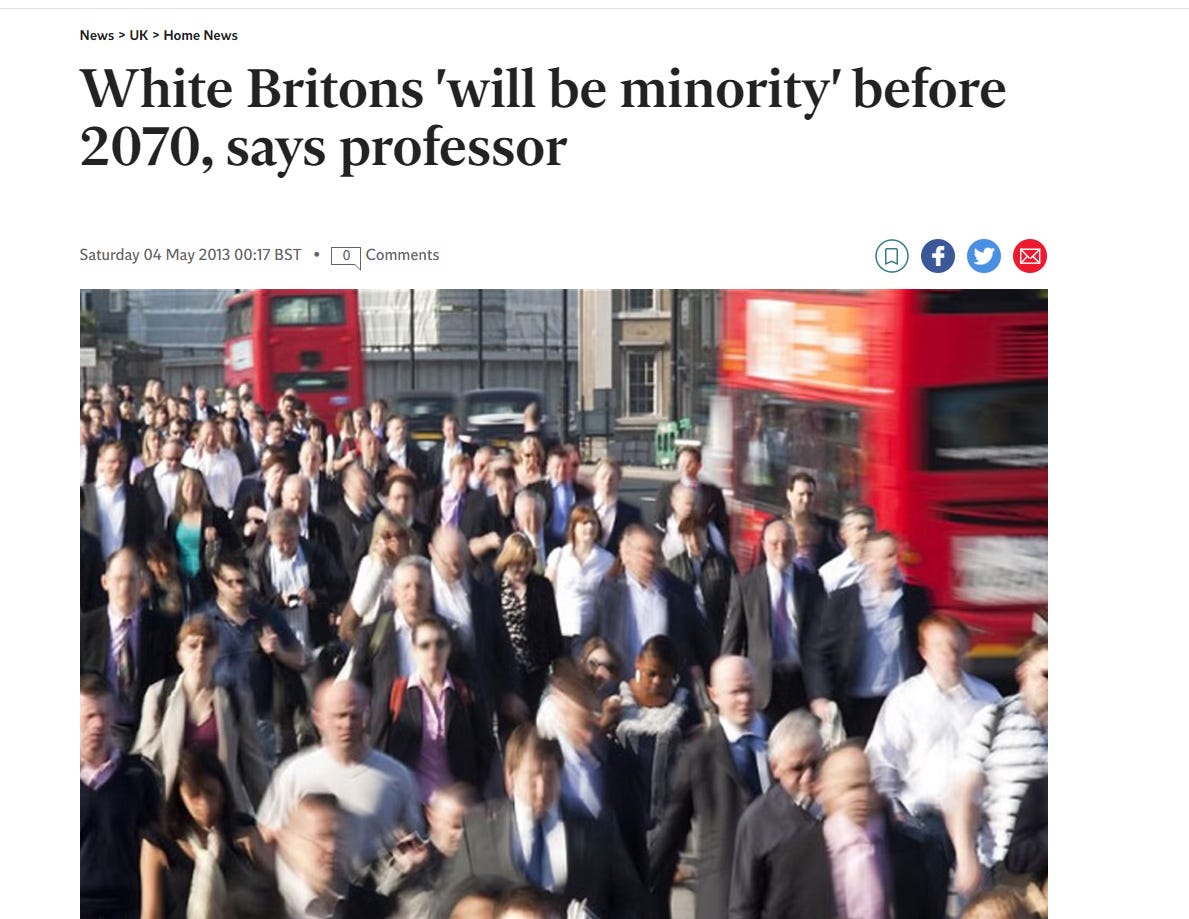
Many celebrate this process for promoting diversity and multiculturalism. Many celebrate it for the cultural effects it has on Europe, and even supposed economic benefits.
The reality is that this process is creating deep social divides, fostering resentment among the native population, and even pushing society towards race-war. The historical evidence is clear: multi-ethnic states that fail to create a strong national identity are prone to internal conflict and destruction. The Austro-Hungarian Empire, Yugoslavia, and the Ottoman Empire collapsed because they could not manage their internal diversity. Now, contemporary Europe is on the same road. It might not be obvious now, however the deep fissures in society are already here, and these cracks will deepen with time.
One reason the effects of mass immigration may be worse for Europe has to do with time. Those empires described above had centuries for different groups to learn to coexist (albeit not enough to prevent them killing each other in the end). In contrast, modern immigrants are completely new to Europe, and the native population has had little time to adjust, which heightens ethnic tensions even more than in these historical cases. Thus, the dangers of ethnic conflict is greater today than the past.
John Mearsheimer in his article “Bound to Fail: The Rise and Fall of the Liberal International Order” makes this point:
In a world where national identity matters greatly, mixing different peoples together, which is what happens when there are open borders and broad-minded refugee policies, is usually a prescription for serious trouble. It seems clear, for example, that immigration was the main reason British voters supported Brexit… The large numbers of refugees from the Greater Middle East that began arriving in Europe in 2015 have certainly not been accorded the kind of welcome one would expect from states that are at the center of the liberal international order.
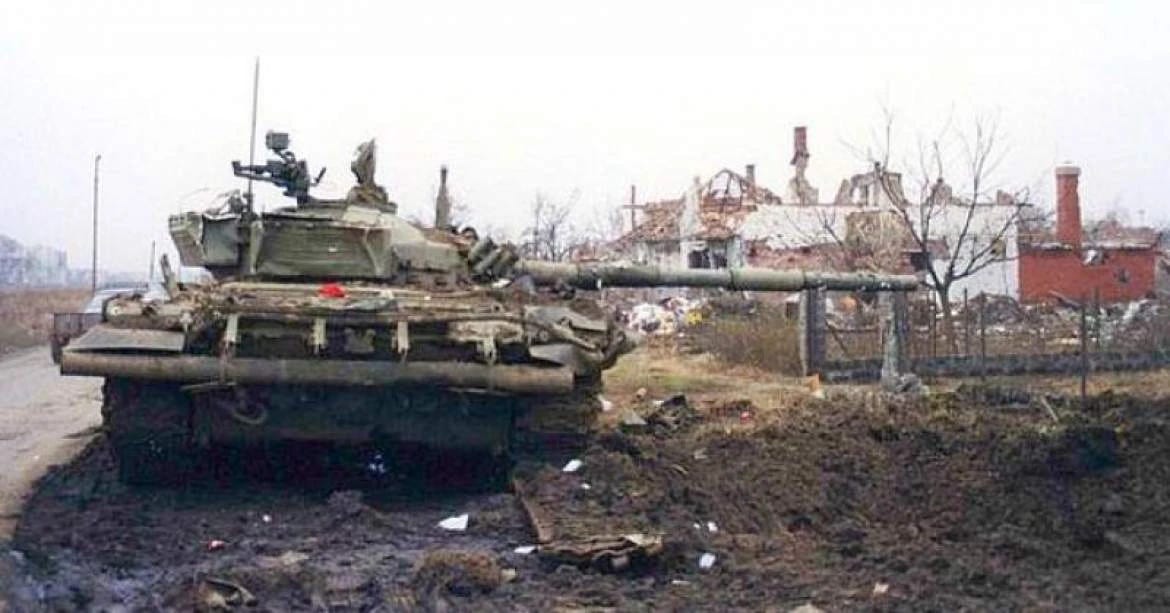
The devastation of the Yugoslav Wars.
Countries like France, Germany, Sweden, and the United Kingdom are already struggling with the consequences of multiculturalism. Ethnic enclaves are forming in major cities, where large numbers of immigrants live separately from the native population, following their own cultural norms. In France, for example, ethnic tensions have erupted multiple times. The 2005 riots, which began in the Paris suburbs and spread across the country, were triggered by the deaths of two teenagers of immigrant descent. These riots, which included arson, looting, and violent clashes with police, exposed deep social divides. Sociologist Michel Wieviorka writes,
“The riots were a manifestation of the deep divisions within French society. Immigrant communities, particularly from North Africa, have not been integrated into the French social fabric, and instead, they live in segregated enclaves, where they feel disconnected from the rest of the country. This lack of integration is breeding resentment and increasing the potential for future conflict, even race-war.”
The France riots of 2023 were yet another sign of these divisions. These ethnic tensions are not unique to France but are appearing all across Europe.
The England riots of 2024 further highlight how ethnic divisions are leading to unrest. These riots began in London but soon spread to other major cities, with violent clashes becoming widespread. The riots were sparked by clashes between ethnic minority communities and law enforcement, but they revealed deeper problems of social division. Political commentator Douglas Murray writes in The Strange Death of Europe,
“The England riots of 2024 were a stark reminder that Europe’s multicultural experiment is failing. Far from creating a harmonious society, multiculturalism has bred resentment and division. Ethnic enclaves have formed across the continent, where different communities live in parallel worlds, with little interaction or integration. These divisions are not just social—they are deeply cultural and increasingly racial. The potential for large-scale ethnic conflict, even race-war, is growing with each passing year.”
These riots demonstrate that Europe’s ethnic divides are growing deeper, and they are likely to result in even more violent conflict in the future.
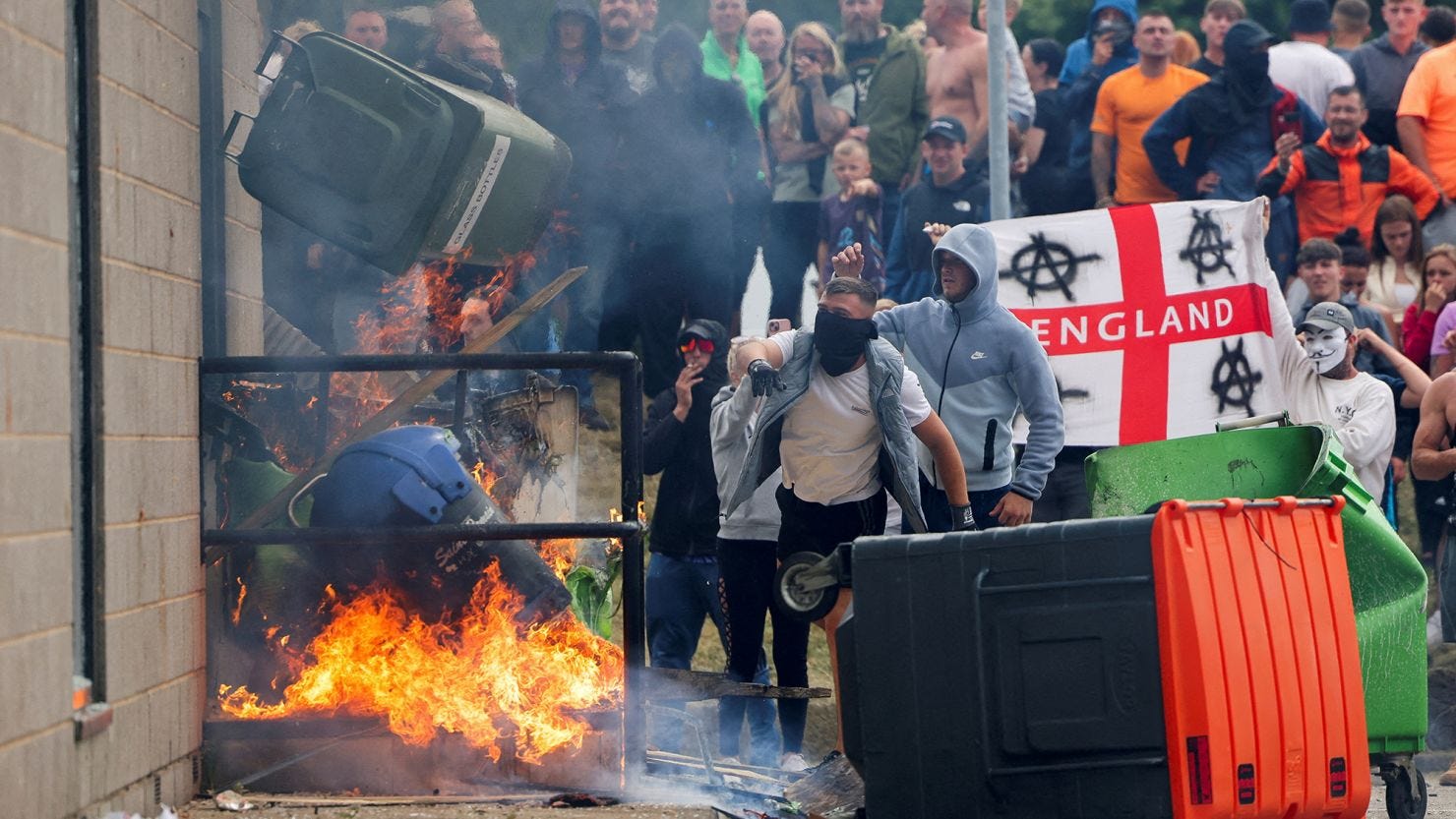
2024 English Riots. A lack of social cohesion is clear.
Germany also shows the effects of failed multiculturalism. In 2010, Chancellor Angela Merkel famously said, “Multikulti has utterly failed,” recognising that Germany’s attempts to integrate large immigrant populations had not worked. In Berlin, neighbourhoods like Neukölln have become symbols of this failure. These neighbourhoods are home to large Turkish and Arab communities, who live separately from broader German society. Many residents continue to follow their own cultural and religious norms, rarely mixing with the German population. Economist Paul Collier writes in Exodus: How Migration is Changing Our World,
“The creation of ethnic enclaves in Europe’s cities is eroding social trust and increasing the likelihood of ethnic conflict. As these communities grow more isolated, the potential for large-scale violence—or even race-war—increases. Europe’s failure to integrate its immigrant populations is not just a social problem; it is a ticking time bomb.”
Europe’s growing ethnic divisions will lead to further conflict unless it changes course.
Political scientist Robert Putnam’s extensive research shows that in ethnically diverse communities, people tend to trust each other less, participate less in civic activities, and have less confidence in their local governments. Putnam writes,
“In the short to medium run, ethnic diversity seems to reduce social solidarity and social capital. People living in diverse communities tend to trust each other less, participate in community activities less, and have less confidence in their local government.”
These findings are alarming for Europe, where rapid immigration has increased diversity. As social trust erodes, societies become more polarised, and ethnic tensions increase.
The rise of far-right movements across Europe is evidence of a growing backlash against multiculturalism. In France, Marine Le Pen’s National Rally continues to gain support, while in Germany, the Alternative for Germany (AfD) party has capitalised on anti-immigrant sentiment. Sociologist Ruud Koopmans explains this rise: “The rise of far-right movements in Europe is not just a political phenomenon; it is a direct response to the failure of multiculturalism. As native populations feel increasingly alienated in their own countries, they are turning to far-right parties that promise to protect their cultural heritage. This polarisation is creating a dangerous dynamic, where ethnic and racial divisions are hardening, increasing the potential for large-scale conflict.” The growing popularity of these far-right parties is a warning that Europe’s ethnic divisions are deepening, and without intervention, they will lead to violent conflict.
Multiculturalism is not strengthening Western Europe—it is tearing it apart. History shows that multi-ethnic states cannot survive, especially without a unifying national identity. Europe is engineering it’s destruction. Ethnic enclaves, social unrest, and the rise of far-right movements are all signs that Europe’s multicultural experiment is failing. The England riots of 2024, the France riots of 2023, and growing ethnic tensions across the continent show that race-war is a real possibility. Unless Europe abandons multiculturalism and prioritises national unity, it will face the same fate as those empires before it: disintegration, race-war, and collapse.
At the heart of the problem is the rate at which a society can absorb foreign people. When they arrived at a rate that allows them to assimilate to the local culture - to self-identify with it - there is unlikely to be intercultural disharmony. That rate will depend on how different the incoming culture is from the indigenous culture. And probably the most relevant difference has to do with the things people value. As you present it, Europe is allowing immigration from very different cultures at a rate that many societies cannot adequately assimilate. If that is the case, the rate ought to be slowed. Better border control could help in that regard, but another move could be to help people where they are, by investing in foreign economies and following a foreign policy that stabilises - rather than destabilises - the developing world.
Excellent essay! Full of truths. I can think of many other places that are under this forced migration and that will either fight back or disappear as a people. For instance, Quebecois/French Canadians come to mind. Just 8 million of them, french speakers, catholic with its own culture. Currently illegals & legals are inundating them (some 600,000 in Montreal alone in one year). They complain to lack the resources to handle them but it's much more sneaky than appears: I suspect it's a gov plan, plain and simple, to finally do away with this bothersome other part of Canada! Eventually and likely soon enough, they will lose their language, status and be assimilated into the bigger stream. This historically is something the Brits wanted and tried to do for 100's of years and failed. Now, it could happen unless the Quebecois start pushing back. Multicult is great to discover when you take a plane ride and visit other cultures but when they're invited in to your house, it's a whole different matter. Could it be that ultimately, Quebec will break away as you show in the break up of several empires? I enjoy reading your substack!